

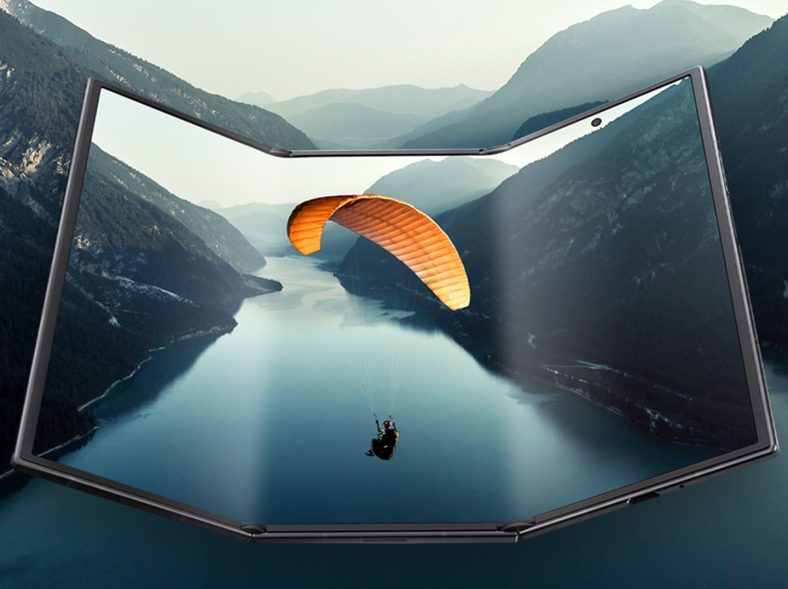
Samsung has officially introduced the Galaxy Z TriFold, a device that aims to redefine what a mobile phone can be. After years of experimenting with foldable formats, the company has taken the bold step of bringing a triple-panel, dual-hinge smartphone to market. The TriFold is not simply a refinement of earlier Galaxy Z Fold models, but a leap into a new category of portable computing.
The launch comes at a strategic moment. Foldable devices are gradually gaining traction, and Samsung has long positioned itself as the leader in this segment. Now, with the TriFold’s debut, the company signals its intention to stay ahead of the curve—especially with the increasing likelihood that Apple will introduce a foldable iPhone in the near future. At first glance, the TriFold appears to be a blend of a handset and a compact tablet, offering a larger canvas for productivity and entertainment without sacrificing portability.
Galaxy Z TriFold Design and Specifications
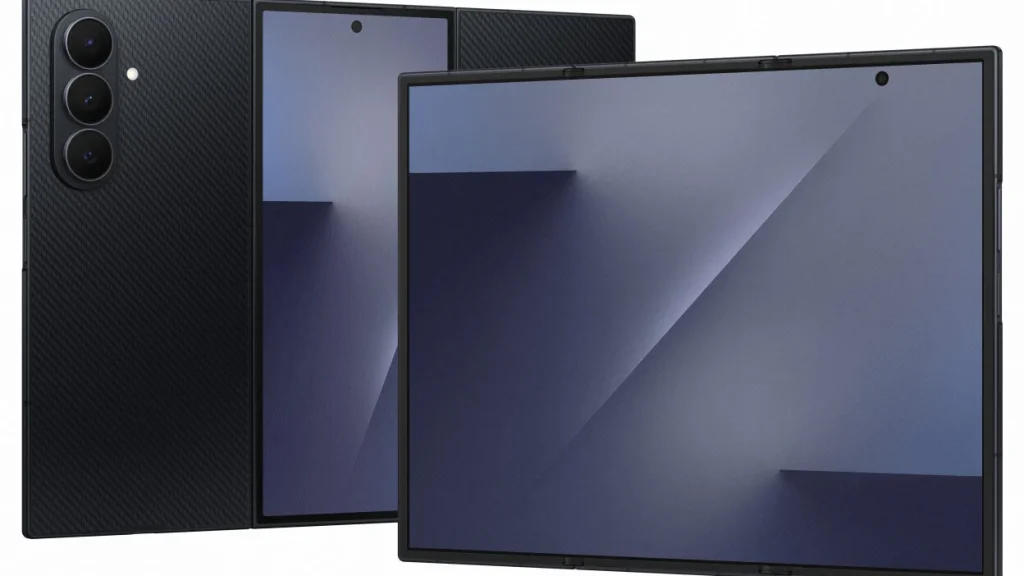
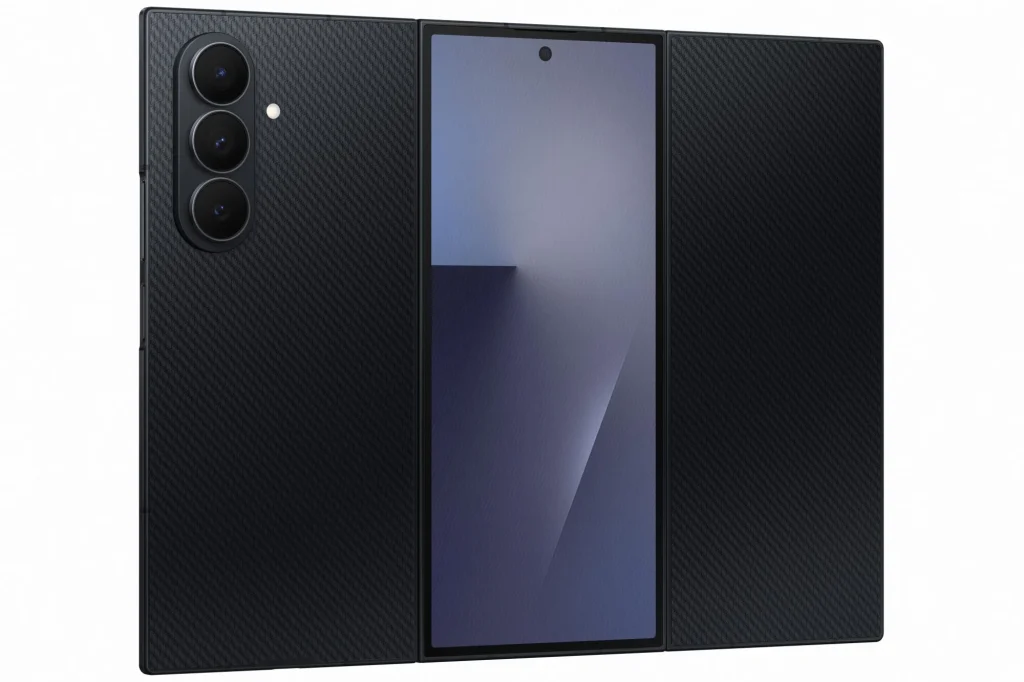
The TriFold’s defining feature is its three-panel internal display. When fully expanded, it forms a roughly 10-inch screen, larger than any previous Samsung foldable. The design folds inward on two hinges, creating a Z-shaped structure when closed. This configuration allows the device to be as compact as a large phone in its folded state, while transforming into a sizable tablet when opened. Users can rely on a 6.5-inch outer display for everyday smartphone tasks without unfolding the device, making it practical for quick use.


Inside, Samsung has equipped the TriFold with high-end hardware befitting a premium flagship. It runs on the latest Snapdragon 8-series processor, supported by 16 gigabytes of RAM, ensuring smooth multitasking across multiple apps. Storage begins at 512 gigabytes, which reflects Samsung’s assumption that this phone will be used for media consumption, productivity, and heavy application workloads. The battery system is distributed across its panels and totals around 5,600 mAh. This multi-cell approach is necessary given the complex form factor, but also suggests that Samsung has been thinking hard about balancing power, runtime, and weight.
The camera system is designed to match the TriFold’s premium status. A triple-lens configuration leads with a 200-megapixel sensor. Secondary lenses, including wide and telephoto cameras, round out the package. Selfie cameras are present on both the cover display and the interior, which should make video calls and content creation more flexible, regardless of how the device is folded.

Here are Galaxy Z TriFold specs:
- Display (Internal): ~10-inch tri-fold panel when fully opened
- Display (Cover): 6.5-inch external screen
- Refresh Rate: 120 Hz (internal display)
- Chipset: Snapdragon 8 Elite series
- RAM: 16 GB
- Storage: 512 GB (base configuration)
- Battery: ~5,600 mAh total (multi-cell design across panels)
- Rear Cameras: Triple system with 200 MP main sensor
- Selfie Cameras: One on external display + one on internal display
- Form Factor: Dual-hinge Z-shaped folding mechanism
- Build: Reinforced hinge components, fiber-reinforced back materials
- Stylus Support: Not included
- Price Range: ~US $2,450–$2,500 depending on region
- Launch: Limited release starting in South Korea, broader rollout later
Market Position and Strategy
The Galaxy Z TriFold is not designed to replace the mainstream Galaxy S lineup or even the Galaxy Z Fold line. Instead, it sits above them as a technological showpiece. Priced well above the average flagship smartphone, the TriFold is clearly aimed at early adopters, power users, and consumers who prioritize novelty and advanced features over affordability. Its retail price is expected to approach or exceed the two-thousand-dollar mark, placing it in the realm of luxury personal electronics.

Samsung appears aware of these limitations. The company will reportedly begin sales in select Asian markets, including Korea, before expanding internationally. A phased release allows Samsung to gauge demand, iron out manufacturing issues, and adjust marketing strategies without committing to a large-scale global rollout. This approach reflects the brand’s history with foldables: early Fold and Flip devices also launched in limited waves, then scaled up in later generations once reliability and consumer confidence improved.
Beyond the price and availability, the TriFold’s existence is also a statement. Samsung wants to demonstrate that it remains the industry’s leading force in foldables just as competitors prepare their own entries. With the possibility of a foldable iPhone on the horizon, Samsung benefits from showing the world it is already thinking beyond dual-panel designs. The TriFold serves as a way to shape the narrative: Samsung is not reacting to trends—it is setting them.
Challenges and Unanswered Questions
As groundbreaking as the TriFold may be, its path to success is not guaranteed. The dual-hinge design raises legitimate concerns surrounding long-term durability and dust resistance. Past foldables have struggled with hinge wear, display film peeling, and mechanical stress. A triple-panel device doubles these risk points. Even if Samsung has addressed these issues with improved engineering, public perception will take time to shift.
Software is another challenge. A large internal display only matters if the operating system and apps adapt gracefully. Samsung’s existing multitasking features, such as split-screen and drag-and-drop, will help, but developers may need to optimize their apps explicitly for the TriFold’s unique form factor. Without strong software support, users may find themselves simply watching movies on a bigger phone or browsing the web without meaningful productivity gains.
The TriFold also raises philosophical questions about how people use mobile devices. Do consumers genuinely want tablet-level screen real estate in their pockets, or are they satisfied with large phones and occasional access to laptops or tablets? Some professionals, designers, or gamers may see real benefits, but a broader audience may hesitate, especially as the device pushes far beyond traditional smartphone prices. Foldables remain a relatively small slice of the market, and the TriFold’s future depends on whether that slice will meaningfully grow.

A Step Toward What Comes Next
The Galaxy Z TriFold is more than a new phone—it is a milestone in the evolution of personal technology. Whether or not it becomes a commercial hit, it signals a shift in how companies imagine mobile computing. For Samsung, it marks the beginning of a new era of experimentation, one where screens bend, stack, and unfold to adapt to the demands of everyday life.
Early adopters will be the first to test this vision. Their experiences will determine whether the TriFold remains a daring prototype or becomes the blueprint for the next generation of devices. Either way, Samsung has once again given the industry something impossible to ignore.